|
|
|
 |
 |
 |
 |
 |
 |
|
|
Whale watching cruises are perhaps the most popular way to watch these majestic creatures in their own environment. Excursions last anywhere from one hour to a full day, so make sure you come prepared. Boat trips on the bay can be chilly, windy, and sometimes wet! Make sure you dress warmly, and bring along motion-sickness relief. See whale watching cruise companies listed at the bottom of this page.
If a cruise on the bay makes your stomach queasy, consider bringing your binoculars and watching from shore. Good whale-spotting areas abound all along the coast, from Pacific Grove to Pebble Beach and Carmel to Big Sur. You can even get a seagull's eye view of whales on a special whale watching flight!
|
|
|
 |
|
 |
 |
|
 |
|
|
|
|
|
|
|
|
Monterey's only remaining whalebone sidewalk, a reminder of one of the town's most important industries from 1850 to 1900, can be found at the Whaling Station and Garden in the Heritage Harbor business park across the Recreation Trail from Fisherman's Wharf.
|
|
|
|
|
|
|
|
|
|
|
Whale Watching
 Click here for a list of Sports and Recreation Companies
Click here for our Wildlife Viewing Calendar
As spring progresses and the days grow longer, the great migration of gray whales heading south from the Bering Sea to the calving lagoons off Mexico�s Baja Peninsula draws to a close. During the season�s peak (roughly December through March), as many as 7000 gray whales passed south through the off-shore waters of the Monterey Bay National Marine Sanctuary.
Their place in the binoculars and spotting scopes of whale-watchers is taken by a host of other marine mammals. Humpback whales usually begin appearing in early May, followed by blue whales—the largest animals in the world— as high summer approaches. Smaller species, including fin, minke and killer whales, also known as orcas, frequent the Sanctuary, while Pacific white-sided dolphins, Risso�s dolphins, and Dall�s porpoises frolic in the bay by the thousands almost year-round.
That�s why whale-watching cruises are offered year round from Monterey and Moss Landing in Monterey County. They�re led by experienced captains and naturalists, who are delighted to introduce visitors from every walk of life and every age to the fascinating and beautiful creatures who call our California waters home.
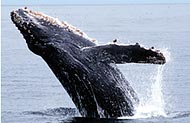
Photo courtesy of Nancy Black, Monterey Bay Whale Watch
|
Experienced whale-watchers may be able to tell the difference between whale species at a glance, but beginners need some tips, especially from May to November, when blue, humpback, minke and fin whales � along with killer whales and other dolphin and porpoise species � all cross paths in the Pacific waters off Monterey Bay.
Recognizing the spout, or plume of exhaled breath, rising into the air is the first, best, way to tell the difference. According to the American Cetacean Society, the blue whale�s 30-foot column of condensing breath is the tallest and most powerful, with the 20-foot, somewhat rounder plume of the humpback right behind. The gray whale, seen more frequently between December and April, produces an almost heart-shaped spout. For more information click here ».
|
|
|
|
|
|